

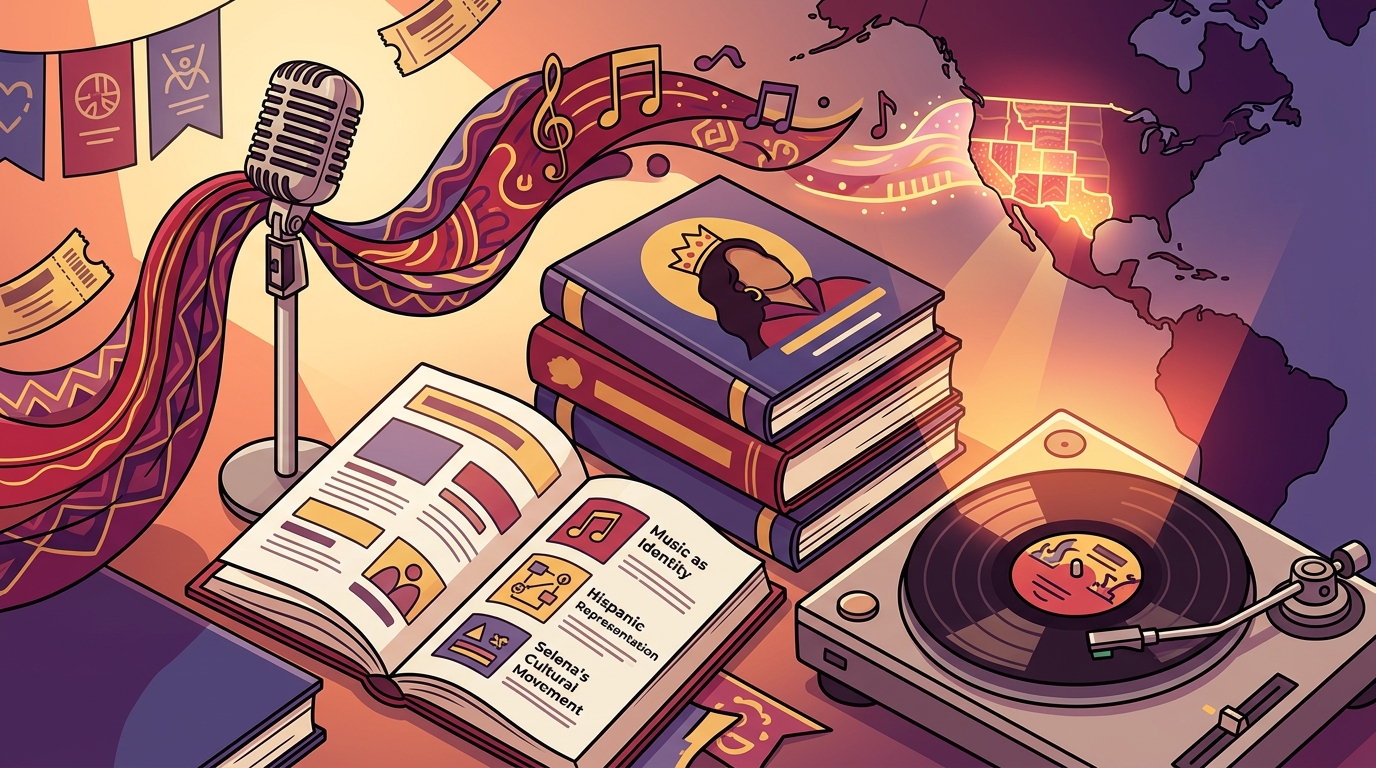
Selena Quintanilla became the symbol of an entire cultural movement by transforming Tejano music into a vehicle for Hispanic identity and political visibility. Author Kris Elizondo explores this shift in her book More Than A Queen, arguing that Selena's rise was not just a music career but a transformative moment in American history where Latino communities gained visibility before achieving full political recognition. according to Selena Quintanilla Bridging
The Political Context of the 1990s
The 1990s United States was a nation in transition, where Latino communities were gaining cultural visibility but lacked corresponding political power. Selena emerged from this specific historical moment, representing a demographic that was increasingly present in the national conversation yet often marginalized in official narratives. This gap between cultural presence and political recognition created a unique space for artists who could bridge the divide.
Tejano music is a genre that serves as both a cultural foundation and a space of self-recognition for Latino audiences. Before mainstream acceptance followed, Latino communities created their own systems of validation through music, fashion, and community gatherings. Selena's ability to operate within this space while reaching broader audiences positioned her as a powerful figure during a time of cultural transition.
The implication of this context is that Selena's legacy extends beyond entertainment into the realm of politics and representation. She demonstrated how cultural figures can shape national conversations about identity, inclusion, and recognition, setting a precedent for future artists and activists.
From Entertainer to Symbol of Identity
As Selena's influence grew, her symbolic importance expanded far beyond her musical output. She became more than an entertainer; she became a representation of identity, pride, and possibility for a generation navigating questions of belonging and visibility. Her ability to bridge cultures while remaining authentic to her roots was central to her symbolic power. according to Selena Quintanilla Bridging
Cultural representation is the process by which a group's identity is reflected and validated through media, art, and public figures. For many Hispanic Americans, Selena provided a mirror in which they could see their own culture celebrated on a national stage. This validation was crucial for a community that had long been asked to assimilate rather than be recognized for its distinct contributions.
The evidence for this shift is found in the way Selena's image was adopted by communities across the United States. Her style, music, and public persona became markers of cultural pride, allowing fans to express their identity in a way that was both personal and political. This adoption by the community itself, rather than just by mainstream media, is what solidified her status as a symbol of a movement.
The Role of Community Validation
One of the most significant aspects of Selena's rise was the role of community validation in her success. Latino audiences created their own systems of validation before mainstream acceptance followed, and Selena was a central figure in this process. Her connection to her community was not performative; it was rooted in her early life in Texas and her dedication to her fans.
Community validation is the process by which a group affirms the value and legitimacy of its own cultural expressions and representatives. In the case of Selena, this validation took the form of record sales, concert attendance, and public support that transcended traditional music industry metrics. This grassroots support gave her a level of cultural authority that was difficult for mainstream institutions to ignore or dismiss.
The implication of this dynamic is that cultural movements are often driven from within the community rather than imposed from outside. Selena's legacy demonstrates that when a community validates its own representatives, it can create a powerful force for cultural change that eventually forces mainstream recognition. This bottom-up approach to cultural influence remains relevant today in how other artists and public figures build their legacies.
The Enduring Impact on Hispanic Identity
Selena's legacy continues to shape discussions about Hispanic identity in America. Her story is often cited in academic and public discourse as an example of how cultural figures can influence broader social and political narratives. The book More Than A Queen explores this enduring impact, tracing how Selena's life and legacy intersect with the evolving political, cultural, and social identity of Mexican Americans and Latinos nationwide.
Hispanic identity is a complex and evolving concept that encompasses a wide range of cultural, linguistic, and political experiences. Selena's legacy contributes to this identity by providing a shared reference point for discussions about belonging, visibility, and recognition. Her story helps to frame the ongoing conversation about how Hispanic Americans are represented in the national narrative.
The evidence for this enduring impact is seen in the continued relevance of Selena's story in contemporary discussions about representation. Her legacy is invoked in debates about immigration, cultural preservation, and political participation, demonstrating that her influence extends well beyond the music industry. This enduring relevance underscores the power of cultural figures to shape long-term social and political trajectories.
Key Takeaways
- Selena's rise coincided with a period when Latino communities were gaining cultural visibility but lacked political power.
- Tejano music served as a space of self-recognition and validation for Latino audiences before mainstream acceptance.
- Selena became a symbol of identity, pride, and possibility for a generation navigating questions of belonging.
- Community validation played a crucial role in establishing Selena's cultural authority and symbolic power.
- Her legacy extends beyond music into the realm of politics and representation, shaping national conversations about identity.
- The book More Than A Queen provides a detailed exploration of this cultural and political transformation.
Frequently Asked Questions
Why is Selena considered a symbol of a cultural movement?
Selena is considered a symbol of a cultural movement because her rise coincided with a period when Latino communities were gaining visibility but not yet full recognition or power. She became a representation of identity, pride, and possibility for a generation navigating questions of belonging and visibility.
How did Tejano music contribute to Selena's legacy?
Tejano music served as both a cultural foundation and a space of self-recognition for Latino audiences. It allowed Selena to connect with her community in a way that was authentic and meaningful, creating a foundation for her broader cultural impact.
What is the difference between cultural visibility and political recognition?
Cultural visibility refers to the presence of a group in media and public life, while political recognition refers to the formal acknowledgment of a group's rights and status in the political system. Selena's era was characterized by increasing cultural visibility without corresponding political recognition.
How does the book More Than A Queen explore Selena's legacy?
The book explores Selena's legacy by placing her rise alongside the evolving political, cultural, and social identity of Mexican Americans and Latinos nationwide. It argues that her legacy extends beyond music into the realm of politics and representation.
What role did community validation play in Selena's success?
Community validation played a crucial role in Selena's success by providing a foundation of support that transcended traditional music industry metrics. This grassroots support gave her a level of cultural authority that was difficult for mainstream institutions to ignore.
Explore the Full Story
For a deeper understanding of how Selena's legacy shaped American cultural and political history, explore the full collection of works by Kris Elizondo. The author's perspective offers a unique lens on the intersection of Latino culture, music, and politics, providing readers with a comprehensive view of this transformative era. To learn more about the author's work and upcoming events, visit the About Kris Elizondo page or browse the Books section to discover more about this cultural exploration.