
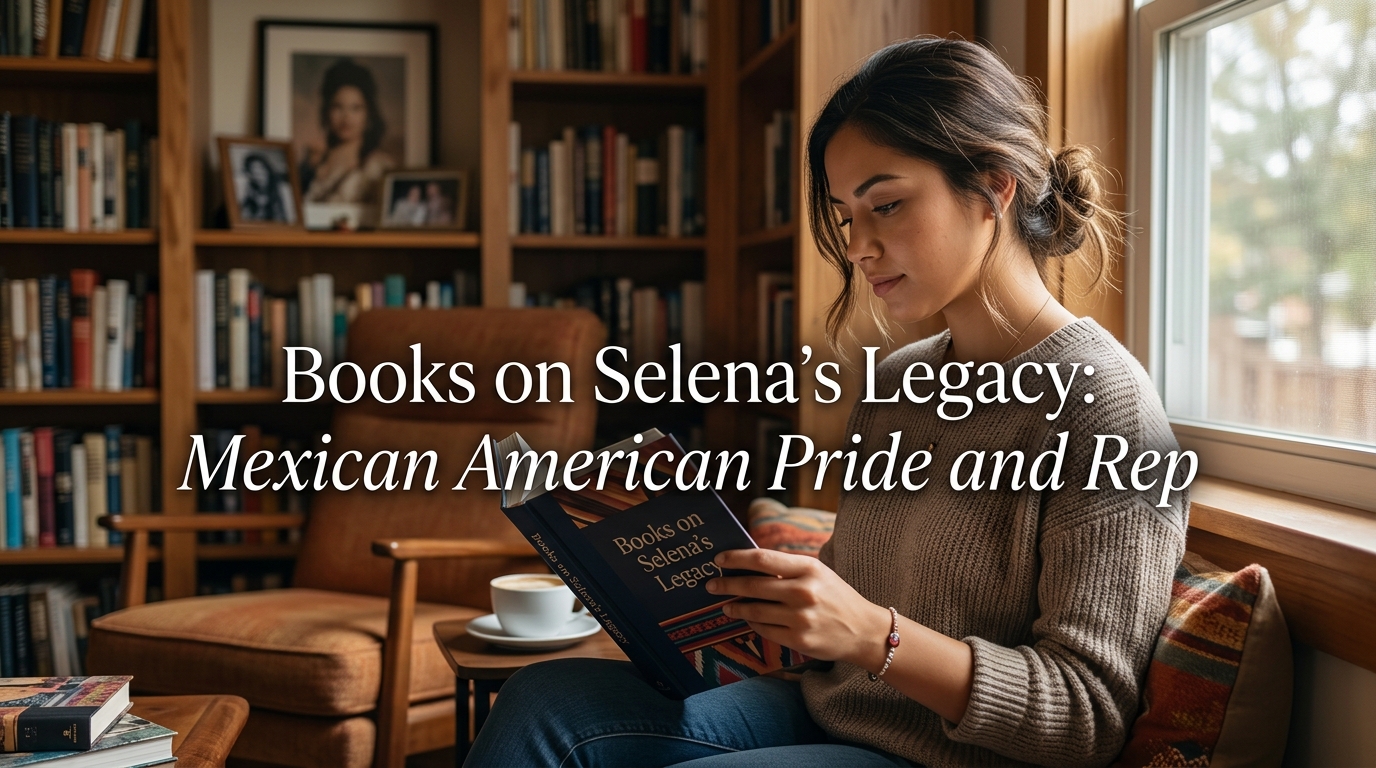
Books on Selena's Legacy: Mexican American Pride and Representation
Books examining Selena's legacy reveal how she became a symbol of Mexican American and Latino pride by bridging cultural gaps and challenging mainstream narratives. This guide explores key works that analyze her impact on identity, politics, and music. It covers cultural iconography, Latino representation, the concept of Latinidad, and the Tejano music legacy.
Selena's Cultural Iconography
Selena Quintanilla's visual and symbolic presence transcended traditional celebrity status. Her image became a vessel for cultural pride, particularly among Mexican American communities in Texas. Cultural iconography is the system of symbols and images that convey meaning within a specific cultural context. In Selena's case, her fashion, stage presence, and public persona created a distinct visual language that resonated with marginalized groups.
Visual Symbols of Pride
Symbolic Resonance
Her early death transformed her from a pop star into a martyr for cultural recognition. This shift is documented in various biographical and cultural studies. These works argue that her symbol status was not just about music, but about the right to be seen and celebrated in one's own identity.
Latino Identity and Representation
The representation of Latino identity in American media has historically been limited or stereotyped. Selena's rise offered a counter-narrative that emphasized authenticity and community connection. Latino identity is a complex, evolving construct that encompasses shared cultural experiences, linguistic heritage, and political consciousness. Books on this topic examine how Selena's work provided a platform for discussing these issues.

Challenging Mainstream Narratives
Author Kris Elizondo explores this dynamic in More Than A Queen: Selena, Hispanic Identity, and the Legacy That Changed America. The book argues that Selena's legacy extends beyond entertainment into the realm of politics and representation. It shows how cultural figures can shape national conversations about identity, inclusion, and recognition.
Political Implications
The literature connects cultural representation to political power. When a community sees itself reflected in popular culture, it strengthens its claim to full citizenship and social equity. Selena's ability to bridge cultures while remaining authentic to her roots positioned her as a powerful figure during a time of cultural transition.
The Concept of Latinidad
Latinidad is a term used to describe the shared cultural and political identity of people of Latin American descent in the United States. It is distinct from specific national origins and emphasizes a pan-Latino solidarity. Books examining Selena's impact often use this concept to frame her appeal across different Latino subgroups.
Pan-Latino Solidarity
Selena's music and public persona helped foster a sense of unity among diverse Latino communities. Her work in Tejano music, a genre rooted in Mexican American culture, reached audiences who identified with broader Latino experiences. This cross-pollination is a key theme in academic and popular literature on her legacy.
Defining the Self
The concept of Latinidad also involves the ongoing negotiation of identity in a multicultural society. Selena's story is often cited as an example of how individuals can navigate these complexities while maintaining a strong connection to their roots. Her legacy continues to inform discussions about how Latinos define themselves in the 21st century.
Tejano Music Legacy
Tejano music is a genre that blends traditional Mexican music with contemporary pop and rock influences. It emerged in the 1980s and became a powerful force for cultural expression among Mexican Americans. Selena was the most prominent figure in this genre, and her work is central to any discussion of its legacy.
Cultural Foundation
Books on Selena's legacy highlight the role of Tejano music as a space of self-recognition. Latino audiences created their own systems of validation within this genre before mainstream acceptance followed. This community-driven support was crucial to Selena's success and to the genre's growth.
Enduring Impact
The legacy of Tejano music continues to influence contemporary Latino artists and cultural movements. Selena's contributions to the genre are widely recognized as a transformative moment in American music history. Her work demonstrated that regional, culturally specific music could achieve national and international recognition.
Comparison of Key Themes in Selena's Legacy
| Theme | Focus in Literature | Key Insight |
|---|---|---|
| Cultural Iconography | Visual symbols and public persona | Her image challenged mainstream erasure of Latino aesthetics. |
| Latino Identity | Representation and political power | Cultural visibility strengthens claims to social equity. |
| Latinidad | Pan-Latino solidarity and self-definition | Her work fostered unity across diverse Latino subgroups. |
| Tejano Music | Genre development and community validation | Regional music achieved national recognition through community support. |
Key Takeaways
- Selena's legacy is a key subject in studies of Mexican American and Latino pride.
- Her cultural iconography challenged mainstream media's erasure of Latino aesthetics.
- Books like More Than A Queen connect her music to broader political and social issues.
- The concept of Latinidad helps frame her appeal across diverse Latino communities.
- Tejano music served as a space for self-recognition and community validation.
- Her legacy extends beyond music into the realm of politics and representation.
- Cultural figures like Selena can shape national conversations about identity and inclusion.
- Her work demonstrated that regional, culturally specific music could achieve national recognition.
Frequently Asked Questions
What is the main argument of More Than A Queen?
The book argues that Selena's legacy extends beyond music into the realm of politics and representation, showing how cultural figures can shape national conversations about identity, inclusion, and recognition.
How did Selena challenge mainstream narratives?
What is Latinidad?
Latinidad is a term used to describe the shared cultural and political identity of people of Latin American descent in the United States, emphasizing pan-Latino solidarity.
Why is Tejano music important to Selena's legacy?
Tejano music was the genre in which Selena achieved prominence. It served as a space for self-recognition and community validation for Mexican Americans.
How did Selena foster pan-Latino solidarity?
Her music and public persona helped foster a sense of unity among diverse Latino communities by bridging different cultural experiences.
Where can I buy More Than A Queen?
The book is available for purchase from Kris Elizondo's official website and other retail platforms.
Conclusion
Books examining Selena's legacy reveal her profound impact on Mexican American and Latino pride and representation. From her cultural iconography to her role in the Tejano music scene, her story is a testament to the power of cultural expression. Kris Elizondo offers a compelling exploration of these themes in More Than A Queen, providing readers with a deeper understanding of how one artist came to represent a transformative moment in American history. Explore the full collection of works on Kris Elizondo's books to delve further into these important cultural and political discussions.