

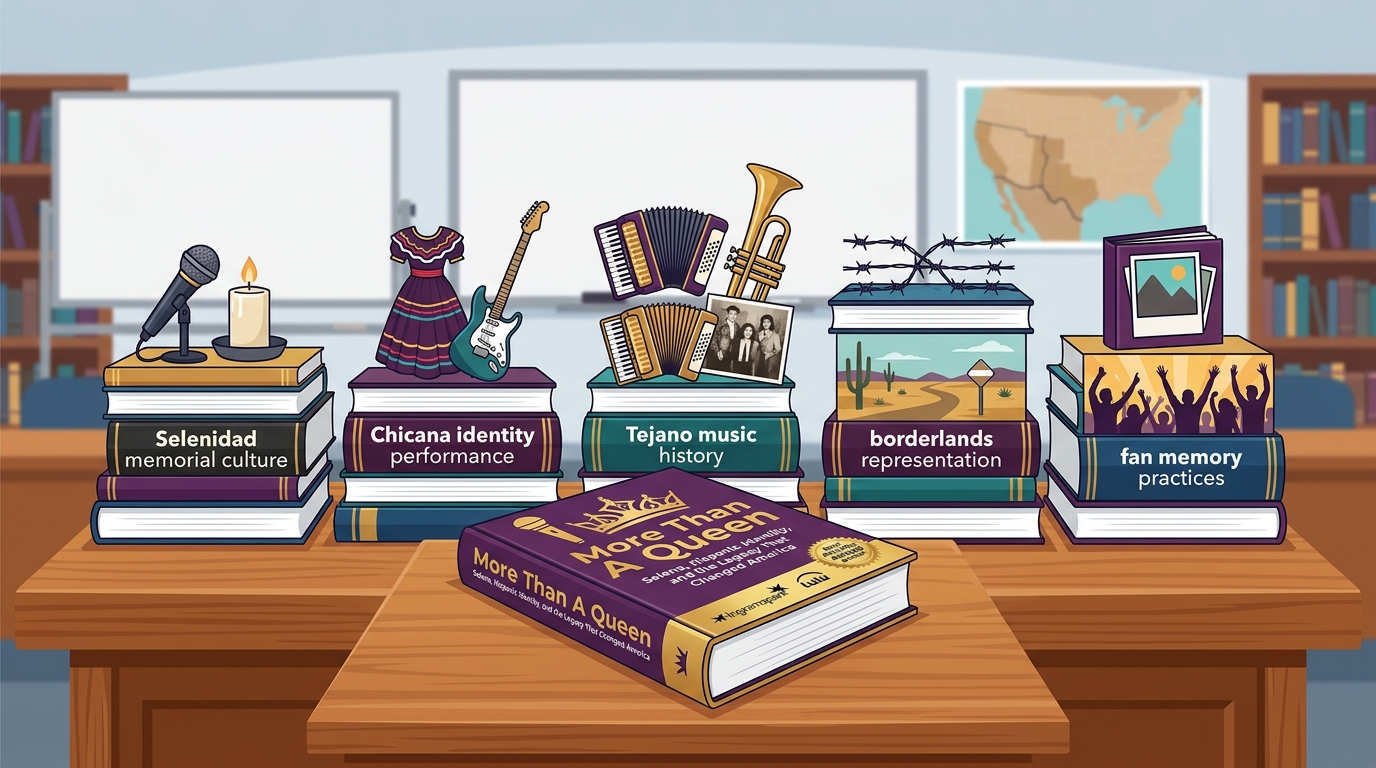
Assigning books for a Latino studies or Chicano studies course requires selecting texts that examine representation, identity, and cultural impact. More Than A Queen by Kris Elizondo serves as a primary text for discussing how Selena Quintanilla shaped American history. This guide covers five essential thematic areas: Selenidad memorial culture, Chicana identity performance, Tejano music history, borderlands representation, and fan memory practices. It provides a structured framework for educators to build a comprehensive curriculum.
Selenidad Memorial Culture
Selenidad is a cultural phenomenon that emerged following the death of Selena Quintanilla in 1995. It represents a collective mourning process that transcended traditional celebrity worship. The term describes a specific form of memorial culture where fans engage in ritualistic acts of remembrance. These acts include visiting gravesites, wearing specific colors, and participating in annual commemorative events. This culture is not merely about nostalgia. It is an active political and social statement about the value of Latino lives in the United States.
The Political Nature of Grief
Grief in the context of Selenidad is political. It challenges the marginalization of Latino artists in mainstream media. By mourning Selena, fans assert their presence and demand recognition. This section of the syllabus should explore how personal loss becomes a public event. It should examine the role of media in shaping this collective grief. The media narrative often framed Selena as a victim, which reinforced certain stereotypes. However, fans reclaimed her image as a symbol of strength and success.
Comparing Memorial Practices
Understanding Selenidad requires comparing it to other forms of celebrity memorialization. The table below outlines key differences between Selenidad and general pop culture mourning.
| Duration | Long-term, sustained over decades | Often short-term, fading quickly |
| Political Dimension | Strong focus on identity and representation | Minimal political focus |
| Community Role | Central to community cohesion | Peripheral to community life |
Students should analyze how these differences reflect broader social dynamics. The persistence of Selenidad indicates a deep-seated need for representation. It shows that fans are not just consumers. They are active participants in shaping cultural narratives.
Chicana Identity Performance
Chicana identity performance is the act of expressing cultural identity through public behavior and artistic expression. It involves navigating the tensions between assimilation and preservation. Selena’s career exemplifies this performance. She balanced her roots in Texas with her aspirations for national recognition. Her style, music, and public persona were carefully crafted to appeal to both Latino and non-Latino audiences. This duality is a central theme in Chicano studies.
Navigating Dual Belonging
Dual belonging is a key concept in this section. It refers to the ability to maintain connections to one’s heritage while participating in the dominant culture. Selena’s ability to bridge these two worlds made her a powerful symbol. She did not reject her heritage to succeed. Instead, she used it as a foundation. This approach challenges the notion that success requires assimilation. It offers a model for other Latino artists and public figures.
The Role of Fashion and Style
Fashion is a critical component of identity performance. Selena’s style evolved over time, reflecting her changing status. From her early days in local venues to her peak in the national spotlight, her wardrobe told a story. It showcased her confidence and ambition. Students should examine how fashion functions as a tool for self-expression and political statement. It is a non-verbal language that communicates identity and belonging.
Tejano Music History
Tejano music is a genre that blends traditional Mexican music with American pop and rock influences. It emerged in the 1980s and became a dominant force in the Latino music scene. Selena was a central figure in this genre’s rise to prominence. Her contributions helped bring Tejano music to a wider audience. This section should explore the historical context of the genre. It should examine the social and economic factors that shaped its development.
The Rise of the Genre
The rise of Tejano music was driven by several factors. The growth of the Latino population in Texas created a large market for culturally relevant music. The development of radio stations and record labels dedicated to the genre provided a platform for artists. Selena’s success demonstrated the commercial viability of Tejano music. It proved that Latino artists could achieve mainstream success without abandoning their roots. This success inspired a new generation of musicians.
Cultural Significance
Tejano music is more than a genre. It is a cultural movement. It reflects the experiences and aspirations of the Latino community. It provides a space for self-expression and community building. Students should analyze the social impact of the genre. It has played a role in shaping Latino identity and pride. It has also influenced other genres and artists. Its legacy continues to resonate in contemporary music.
Borderlands Representation
Borderlands representation is the depiction of life and identity in the border region between the United States and Mexico. It explores the unique cultural dynamics of this area. The border is not just a physical line. It is a cultural space where identities are constantly negotiated. Selena’s life and career were deeply rooted in this borderlands context. Her music and image reflected the hybrid nature of border culture. This section should examine how the border shapes identity and representation.
The Hybrid Identity
Hybrid identity is a central concept in borderlands studies. It refers to the blending of cultural elements from both sides of the border. Selena’s identity was hybrid. She was both Mexican and American. Her music blended traditional and modern elements. Her image reflected this duality. This hybridity is a source of strength and creativity. It challenges rigid notions of national and cultural identity. It offers a model for understanding identity in a globalized world.
Challenging Stereotypes
Borderlands representation often challenges stereotypes about Latinos. It presents a more nuanced and complex picture of Latino life. It highlights the diversity and richness of the culture. Selena’s success helped to challenge negative stereotypes. She presented an image of success, beauty, and talent. This image countered the narratives of poverty and criminality that often accompanied Latino representation in the media. Students should analyze how positive representation can impact public perception.
Fan Memory Practices
Fan memory practices are the ways in which fans remember and honor their favorite artists. These practices include creating fan art, writing fan fiction, and participating in online communities. They are a form of cultural production. They allow fans to engage with and reinterpret the artist’s legacy. Selena’s fans have developed a rich set of memory practices. These practices have kept her memory alive for decades. This section should explore the role of fans in shaping cultural memory.
Digital Memory
Digital technology has transformed fan memory practices. Social media platforms allow fans to share memories and create new content. They provide a space for collective remembrance. Fans can connect with each other across geographical boundaries. This digital dimension of memory is a key area of study. It allows for the preservation and dissemination of cultural narratives. It also raises questions about authenticity and ownership of memory.
Community Building
Fan memory practices serve a social function. They build communities of shared interest and identity. They provide a sense of belonging and connection. For Latino fans, these communities can be a source of support and validation. They offer a space to discuss and celebrate their culture. Students should examine how fan communities contribute to social cohesion. They play a role in maintaining cultural continuity in the face of change.
Key Takeaways
- Selenidad is a political and social phenomenon that challenges the marginalization of Latino artists.
- Chicana identity performance involves navigating the tensions between assimilation and preservation.
- Tejano music is a cultural movement that reflects the experiences and aspirations of the Latino community.
- Borderlands representation explores the unique cultural dynamics of the border region.
- Fan memory practices are a form of cultural production that shapes collective memory.
- More Than A Queen provides a comprehensive framework for discussing these themes.
- Curating a syllabus requires selecting texts that offer diverse perspectives on representation and identity.
Frequently Asked Questions
What is the primary focus of More Than A Queen?
The primary focus of More Than A Queen is the cultural and political exploration of Selena’s legacy. It examines how she represented a transformative moment in American history.
How does Selenidad differ from general celebrity worship?
Selenidad is a sustained, political form of memorial culture. It focuses on identity and representation, unlike general celebrity worship which is often short-term and apolitical.
Why is Tejano music important in Chicano studies?
Tejano music is important because it reflects the cultural and social experiences of the Latino community. It provides a space for self-expression and community building.
What is the role of the border in shaping identity?
The border is a cultural space where identities are negotiated. It shapes hybrid identities that blend elements from both sides of the border.
How do fans contribute to cultural memory?
Fans contribute to cultural memory through practices like creating fan art and participating in online communities. These practices preserve and reinterpret the artist’s legacy.
Where can I find More Than A Queen?
You can find More Than A Queen on various retail platforms including Amazon and Barnes and Noble.
Conclusion
Curating a Latino studies syllabus requires a thoughtful selection of texts that explore representation and identity. More Than A Queen by Kris Elizondo offers a valuable perspective on Selena’s cultural impact. It provides a framework for discussing Selenidad, identity performance, and borderlands representation. Educators should use this guide to build a comprehensive curriculum that reflects the complexity of Latino experiences. By engaging with these themes, students can gain a deeper understanding of the role of culture in shaping identity and society. We encourage you to explore the full collection of works by Kris Elizondo to enrich your teaching and research.